
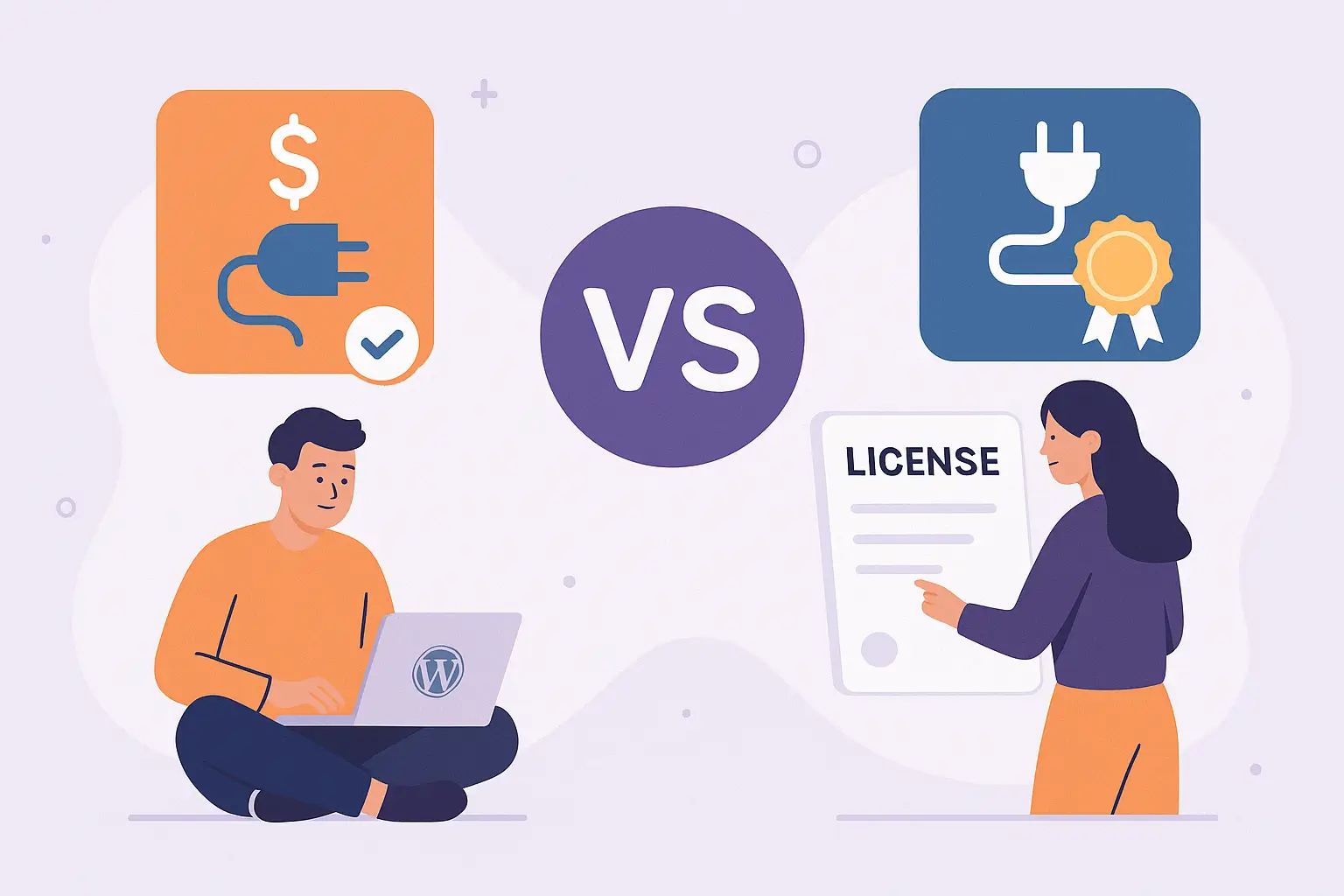
Imagine this: you’ve spent months building your WordPress plugin, added killer features, polished the UI, and now it’s time to sell. But you’re stuck on one big decision: should you offer it as a software subscription or a lifetime license?
This isn’t just a pricing question. It affects your cash flow, support load, product updates, and customer relationships. Let’s break down both models, explore when each makes sense, and help you decide what’s better for your plugin business and how a smart license management system like WC Key Manager can handle both models with ease.
What’s the Difference Between Licensing and Subscription Models?
One-Time License (Perpetual Licensing)
A license gives customers lifetime access to your plugin, usually for a single payment. It may include updates and support for a limited time (e.g., one year), after which users can renew optionally.
Pros:
- Instant revenue from each sale
- Simple offer — users pay once, own it forever
- Easier to promote with discounts and lifetime deals
Cons:
- No recurring revenue
- Harder to fund ongoing development and support
- Users may not renew unless pushed with value-adds
Software Subscription
Subscriptions charge users on a recurring basis, typically monthly, yearly, or at custom intervals. They get access as long as their plan is active.
Pros:
- Predictable, recurring income
- Easier to scale and sustain long-term support
- Encourages continuous engagement and value delivery
Cons:
- Users may churn if they don’t see regular value
- Harder to convert price-sensitive buyers
- More complex to manage cancellations, renewals, and access control
Which Model Is Better for Your WordPress Plugin?
There’s no one-size-fits-all answer. It depends on your plugin type, support load, customer behaviour, and growth goals.
Subscription Works Best When:
- Your plugin updates frequently (e.g., SEO tools, security plugins)
- You provide ongoing services (API access, support, cloud features)
- You want long-term financial sustainability
One-Time License Makes Sense If:
- Your plugin is self-contained (e.g., Gutenberg blocks, UI add-ons)
- Users expect a simple, upfront deal
- You plan to upsell support or premium add-ons later
Pro Tip: Many successful developers offer hybrid models — one-time licenses with limited updates/support, plus yearly renewals or optional subscriptions.
Real-World Use Cases
Let’s look at how WordPress businesses apply these models:
Game Code Store
You sell digital game keys via WooCommerce. A one-time license makes sense; customers buy once, receive their code, and that’s it. WC Key Manager lets you automate code delivery and track redemptions.
Plugin Developer Selling SaaS Features
Your plugin has free features but integrates with a cloud-based API. A subscription model fits best. WC Key Manager supports recurring license activations, access control, and auto-expiry.
Online Course or Membership Site
You sell access codes for digital courses. Subscriptions allow you to provide access for a set period. With WC Key Manager, you can assign and expire license keys based on plan duration.
Managing Licenses and Subscriptions with WC Key Manager
No matter which model you choose, managing licenses manually is a hassle — especially when you scale.
WC Key Manager simplifies everything:
- Issue license keys automatically on purchase
- Set expiration dates for subscriptions or trial periods
- Limit activations per user or domain
- Track renewals, revocations, and expired keys
- Integrate with REST API for external license checks
Whether you’re using WooCommerce Subscriptions or a one-time digital product, WC Key Manager gives you full control over how licenses are issued, validated, and tracked, without writing custom code.
FAQs
What’s the main benefit of subscriptions over licenses?
Subscriptions generate predictable recurring revenue and ensure users keep paying as long as they see value. Licenses may offer short-term gains, but subscriptions are better for sustainable growth.
Can I offer both subscription and license options?
Absolutely. Many developers offer both. WC Key Manager lets you assign different license rules to different products, so you can easily sell both lifetime and subscription-based access.
How do I prevent access after a subscription ends?
With WC Key Manager, license keys can automatically expire at the end of a subscription period, cutting off access unless the user renews.
Conclusion: The Smart Choice Depends on Your Business
Choosing between software subscription vs license isn’t just about pricing, it’s about aligning your model with how you deliver value. Subscriptions are great for ongoing support and features, while licenses offer simplicity and instant wins.
Whichever path you take, don’t let license management become a bottleneck.
Try WC Key Manager — the license key and digital code management plugin built for WooCommerce.
Set up in minutes, start selling confidently, and scale your plugin business with clarity.
Leave a Reply